



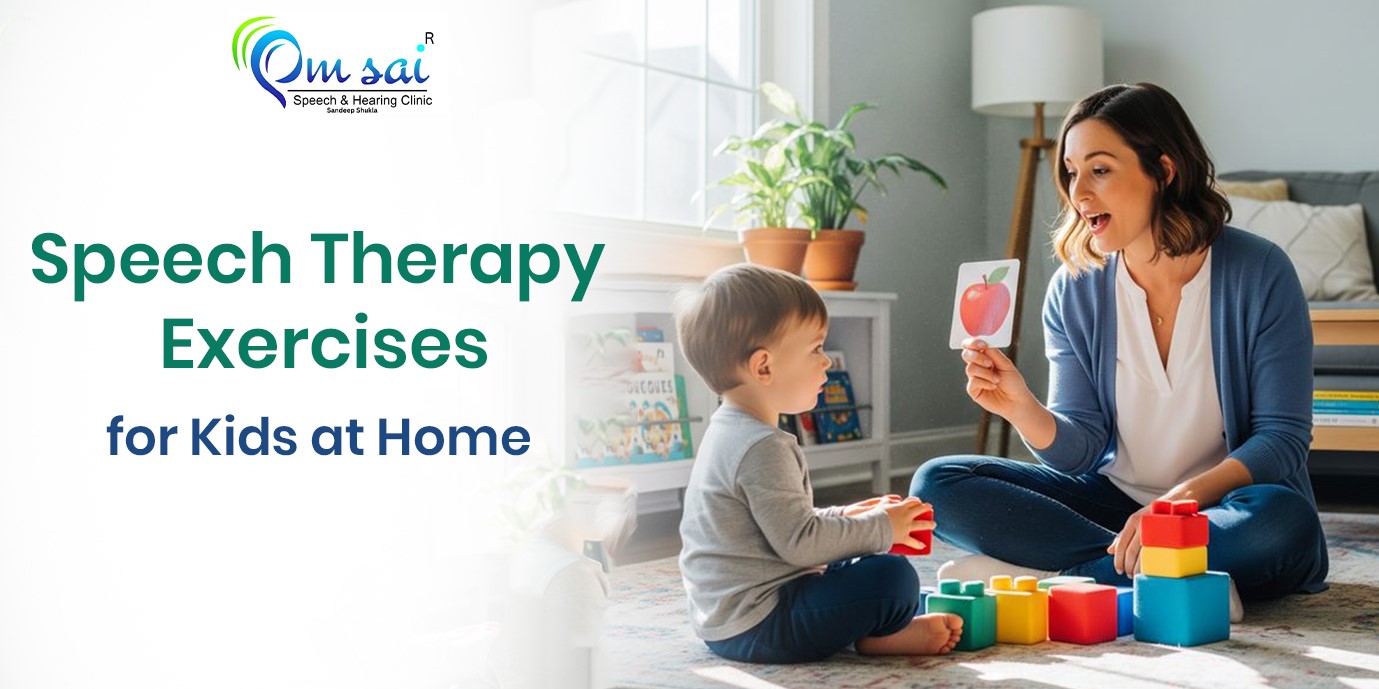
Speech development is an important part of a child’s overall growth. Some children may face difficulties with pronunciation, language understanding, or expressing themselves clearly. In such cases, speech therapy can help improve communication skills. Along with professional therapy sessions, parents can also support their child’s progress by practicing simple speech therapy exercises at home.
Practicing speech exercises at home helps reinforce what children learn during therapy sessions. Regular practice improves speech clarity, boosts confidence, and strengthens communication skills. When parents participate in these activities, children feel more comfortable and motivated to practice speaking.
Blowing exercises help strengthen the muscles used for speech. These muscles are important for controlling airflow and pronunciation.
These fun activities improve breath control and oral motor skills.
Mirror exercises help children observe how their mouth moves while speaking. This improves their awareness of tongue and lip movements.
Your hearing aids clinic in Pune will help you decide which type fits your comfort and hearing requirements.
Tongue strength and flexibility are essential for clear speech.
Reading aloud is a great way to improve pronunciation, vocabulary, and sentence formation.
This activity improves both speech and language skills.
Repeating sounds helps children learn correct pronunciation.
Start with simple words and slowly move to longer sentences.
Songs and rhymes are excellent for speech development. The rhythm and repetition help children remember words and sounds easily.
Nursery rhymes and action songs make learning fun.
Use flashcards or picture books and ask your child to name the objects.
If your child has difficulty speaking, understanding language, or pronouncing words clearly, it is important to consult a professional speech therapist. Early intervention can significantly improve a child’s communication skills and overall confidence.
Speech therapy exercises at home can play a big role in improving a child’s speech and language abilities. Simple activities like blowing games, mirror practice, reading aloud, and singing songs can make learning enjoyable while strengthening speech skills.With regular practice and parental support, children can develop better communication abilities and gain confidence in expressing themselves.